 跳到内容
跳到内容 






Compression Testing Machine-compression test of building material items
This compression testing machine is mainly designed for compression test of building material items, such as concrete cube, concrete blocks, cement specimen, and bricks etc, also used for compression performance test of rubber pad and top forge test of metal.
Compression testing machine ----concrete, cement brick, manhole cover, box compression test or flexural test
HST-YAW-DH compression machine with PC auto loading is driven by hydraulic system and controlled by computer. Equipped with industrial computer, the compression machine can apply constant load to the test specimen. The applied load, timing and test curve can be displayed on the PC in real time. All collected data will be measured, processed, saved and printed automatically for accurate results.
It is conformed to EN 12390-3, 12390-4; BS 1881,ASTM E4, ASTM C139, ISO7500-1, EN10002-2, BS 1610, DIN51220, C1231 –AASHTO T22 -NF P18-411 -UNE 83304, 7242 etc.

Experiential Materials Mechanics Testing
- Extensive ranges for Cubic sample: 100mm, 150mm, 200mm and more
- Rectangular sample: 400x200x200mm, 400x200x400mm etc
- Cylindrical sample dia.150x300mm, dia.100x200mm, dia. 200x400mm or others as per customer required.
- Remark: test space can be customized according to specified specimen size.
Product Features
A brand-new external independent controller
adding an independent external manual control unit provides a completely new solution for the measurement, control, and operation of the testing machine. USB data transmission fully supports laptops, tablets, and desktop computers; it is an important part of leading the development of testing machine technology.


Multi-functional handheld controller
controls the raising and lowering of the loading cylinder and also features a one-button testing function, making the testing process more convenient.
3.U-shaped body
the body is made of QT500-7 material in a single casting, resulting in better frame rigidity, higher strength, and better stability.


Equipment Operation Monitoring System
Our company has made revolutionary improvements to the original high-voltage circuits, adding phase sequence and phase loss self-test indication functions, as well as electrical overcurrent and overload protection functions, making the equipment operation safe and reliable.
Pressure monitoring instrument
Real-time display of differential pressure start-up pressure, system pressure, and clamping pressure of the servo oil source, ensuring the normal operation of the equipment.


Universal Testing Machine Control Software
The universal testing machine control software adopts DSP technology and a neuron adaptive control algorithm to achieve multiple closed-loop control modes such as constant rate test force, constant rate cylinder displacement, and constant rate strain. The control modes can be arbitrarily combined and smoothly switched. It has a network interface, enabling data networking and remote control functions.
Compression Testing Machine Model Selection
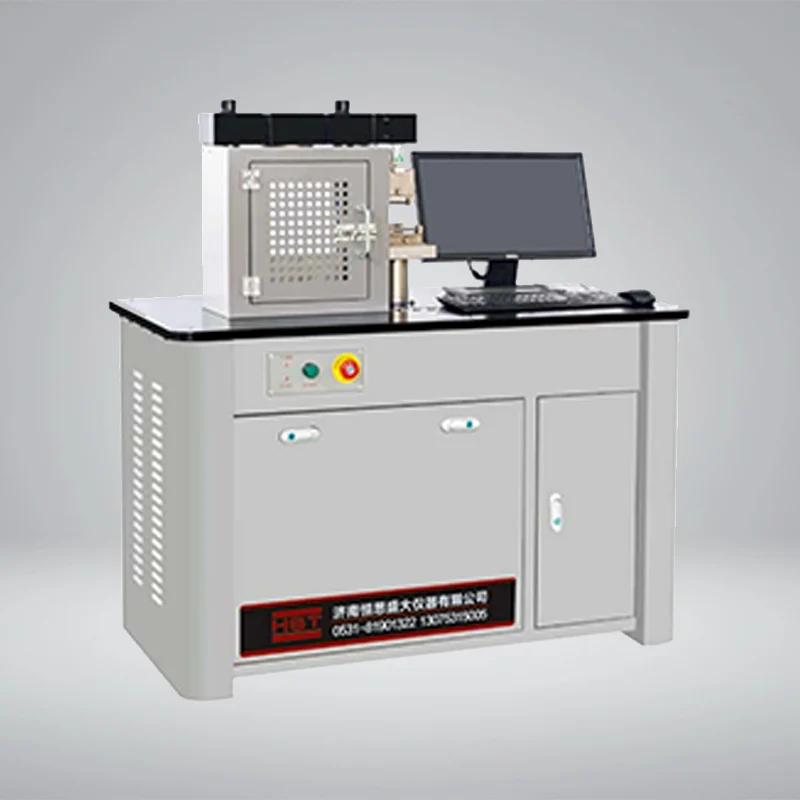
HST-YAW-D/E
HST-YAW-D/E Cement mortar Compression and Flexural Strength Testing Machine(Servo Motor)—The testing machine tests the mechanical properties of cement, mortar, brick, concrete and other building materialswith servo motor acceleration and deceleration control technology, showing the load value, loading speed and loading curve. The test data is automatically processed, stored, and printed.
Test load
- HST YAW-300D,Load:300KN(Compression)
Model
- HST-YAW-300E,Load:300KN(Compression),10KN(Flexure)
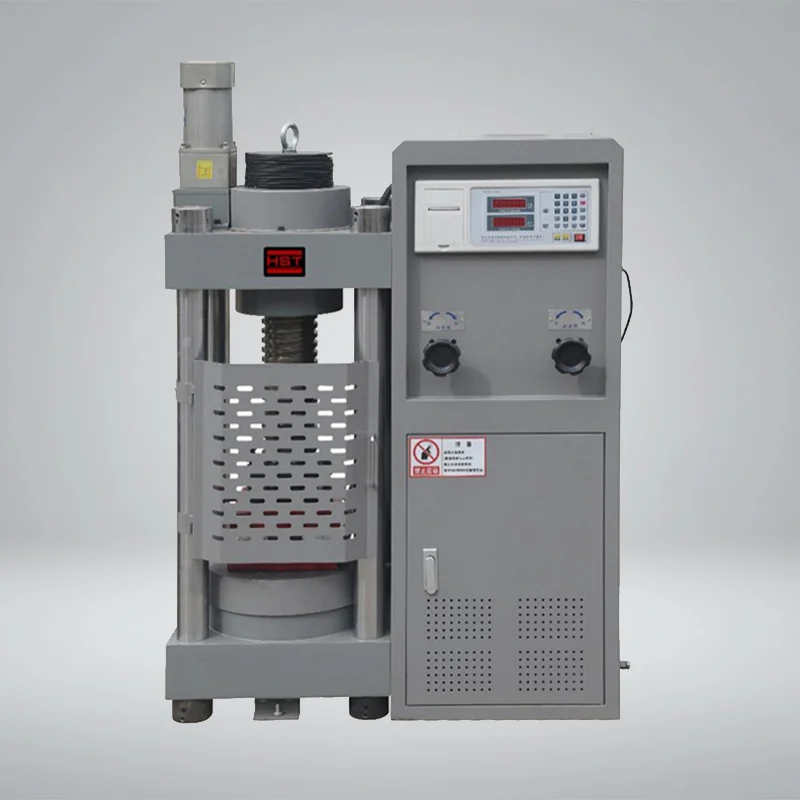
HST-YES-D
HST-YES-D 2000KN,3000KN digital display electric screw adjust compression testing machine
This compression testing machine mainly used for concrete rupture strength testing, cement, plastic sand, and red brick building materials compression resist testing. Widely used in metallurgy, building materials, space flight and aviation, colleges and universities, R&D institution lines. The test operation and data processing meets standard requirements.
Test load
- 2000kN,3000kN
Model
- HST-YES2000/3000D
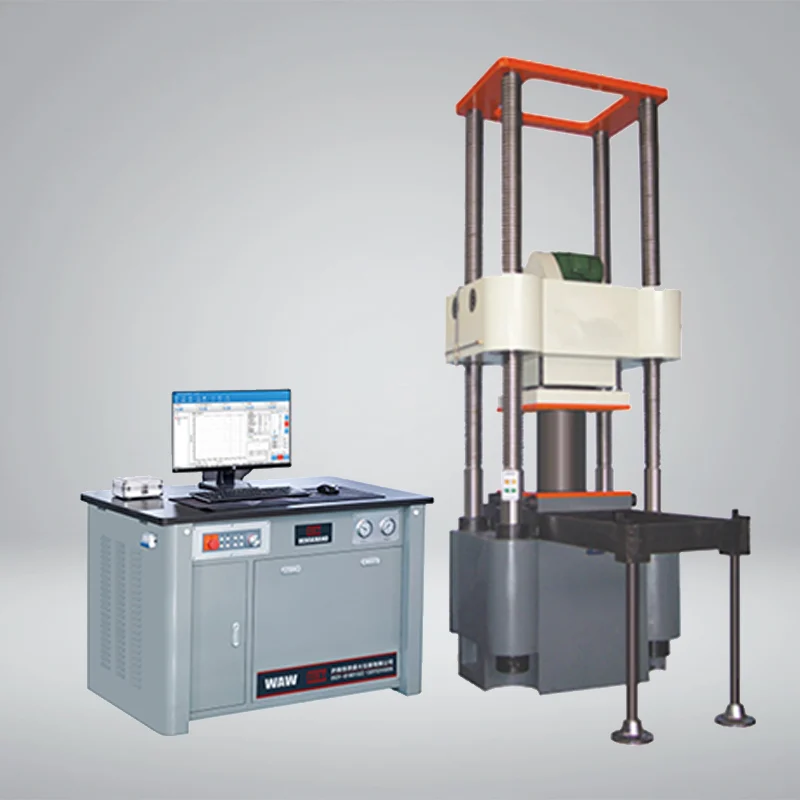
HST-YAW-5000E
Test load
- 5000KN
Model
- HST-YAW-5000E
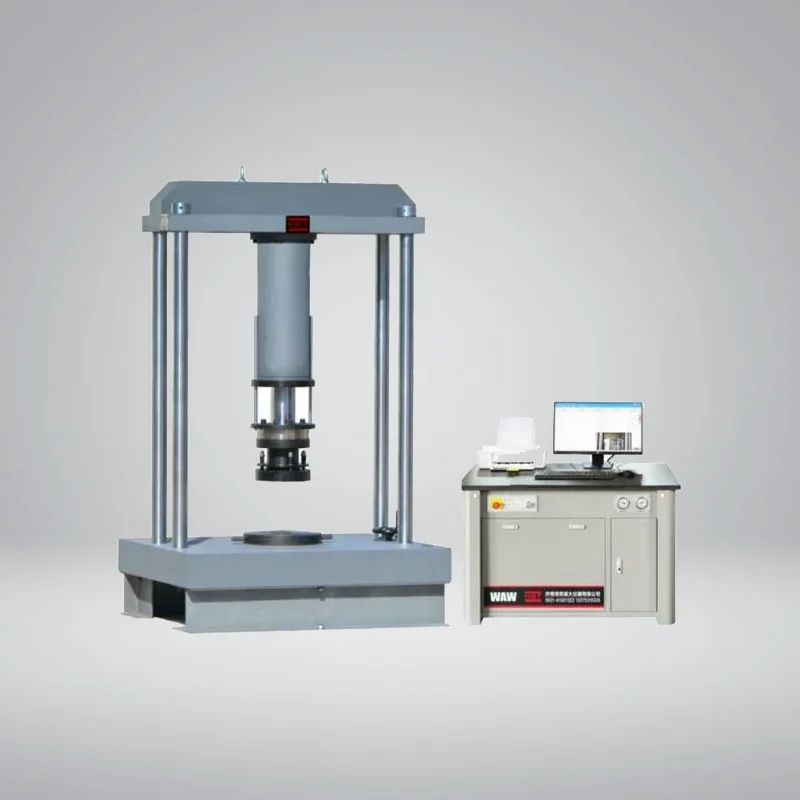
HST-YJ-W
HST-YJ–W Series Computer Control Manhole Cover Compression Testing Machine
This testing machine is suitable for compression and flexural strength testing of manhole covers, meeting relevant professional standards such as CJ/T3012-1993 “Cast Iron Manhole Covers,” CJ/T121-2000 “Recycled Resin Composite Material Manhole Covers,” and JC889-2001 “Steel Fiber Concrete Manhole Covers.”
Test load
- HST-YJ600/1000/1500W
Model
- 600~1500KN
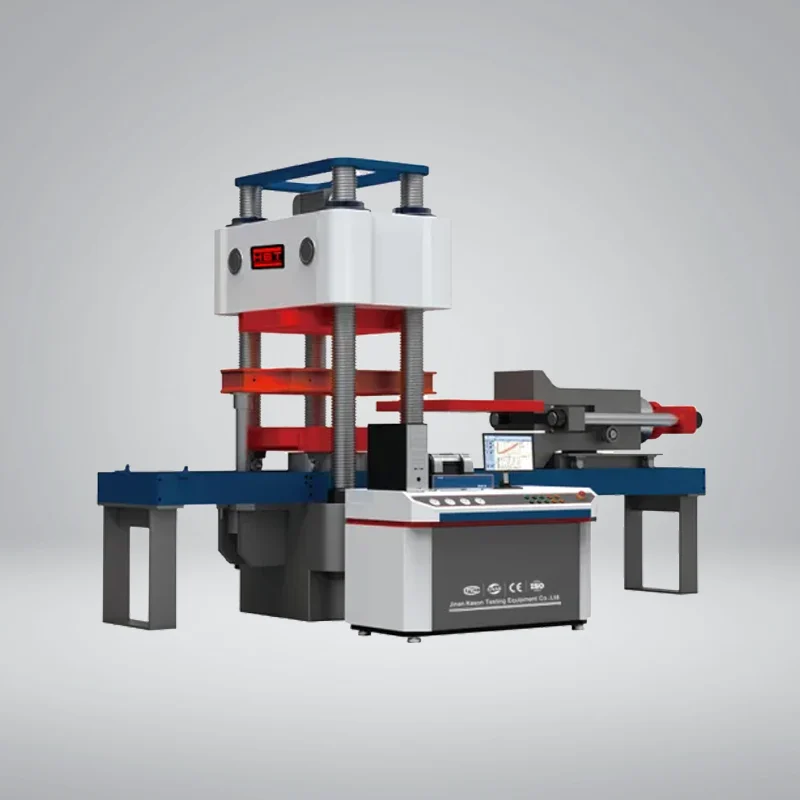
HST-YJW
HST-YJW Series Computer Controlled Elastomeric Bearing Testing Machine
It is mainly used to detect the mechanical performance test (compression, shear, corner), concrete test parts, concrete component component resistance tests (anti -pressure, shear, corners), concrete test parts, and concrete components. test. This test machine can draw the test data and automatically process the test data according to the test requirements, test force, time-displacement, and test force. It is an ideal test equipment.
Test load
- HST-YJW-5000/10000/15000/20000/30000/50000
Model
- 500~50000KN
Special equipment for Compression testing
Concrete block compression test
Concrete Elastic Modulus Testing Device
Leaf spring compression test
Manhole cover Compress test
Application Cases of Compression Testing Machine

Case Study: HST-PT Series Enhances Large Spring Testing for Automotive Giant


Computer-Controlled Compression Testing Machine for Manhole Covers

Zambian Clients Visit Our Factory, Procure YES-2000 2000KN Digital Pressure Testing Machine
General FAQs
What is a concrete Compression testing machine?
A concrete compression testing machine is a specialized device designed to measure the compressive strength of concrete specimens (e.g., cubes, cylinders). It applies controlled axial pressure to the specimen until failure, providing critical data for assessing concrete quality in construction, infrastructure, and material testing applications.
How does a concrete Compression testing machine work?
The machine operates by placing a concrete specimen (typically 150mm cubes or cylinders) between two rigid platens. A hydraulic or servo-electric system applies a gradually increasing load to the specimen. Load cells and sensors monitor the force applied, while integrated software records the maximum load at failure. This data is used to calculate compressive strength (force divided by cross-sectional area).
What key technical specifications should I consider when selecting a machine?
Critical specifications include:
- Maximum test force: Ranges from 300kN to 5000kN
- Loading rate accuracy: Complies with standards (e.g., 0.2–0.5 MPa/s per ASTM C39).
- Platen size: Must accommodate specimen dimensions (e.g., 150mm cubes require ≥180mm platens).
- Control system: Manual, semi-automatic, or fully automatic (with software for data logging/reporting).
Accuracy class: Typically Class 1 (±1% of indicated load) for precise results.
Is the machine compliant with international standards?
Yes. Our concrete Compression testing machines meet global standards, including:
- ASTM C39 (USA): Standard Test Method for Compressive Strength of Cylindrical Concrete Specimens.
- EN 12390-3 (EU): Testing Hardened Concrete—Part 3: Compressive Strength of Test Specimens.
- GB/T 50081 (China): Standard for Test Methods of Mechanical Properties on Ordinary Concrete.
- ISO 4012: Concrete—Compressive Strength of Test Specimens.
How do I ensure safe operation?
Follow these safety guidelines:
- Always wear PPE (safety glasses, gloves, steel-toe boots).
- Secure specimens firmly to prevent slipping during testing.
- Avoid overloading beyond the machine’s maximum capacity.
- Regularly inspect hydraulic lines, platens, and safety guards for damage.
- Train operators on emergency stop procedures.
What maintenance is required?
Routine maintenance includes:
- Daily: Clean platens and remove debris; check oil levels (hydraulic models).
- Weekly: Inspect hydraulic hoses for leaks; lubricate moving parts.
- Quarterly: Calibrate load cells (per ISO 7500-1 or ASTM E4 standards).
- Annually: Professional inspection of hydraulic/servo systems and software updates.
How do I choose the right machine capacity?
Select capacity based on expected concrete strength and specimen size:
- For low-strength concrete (C15–C30): 2000kN machines suffice.
- For high-strength concrete (C50–C80) or large specimens (e.g., 200mm cylinders): 3000kN or higher is recommended.
- Consult our technical team for custom capacity recommendations.
What after-sales support do you offer?
We provide comprehensive support, including:
- On-site installation and operator training.
- 12-month warranty on parts and labor.
- Calibration services (ISO 17025 accredited).
Fast spare parts delivery and technical troubleshooting via phone/email.
Can the machine integrate with data management software?
Yes. Our advanced models include software for:
- Real-time load-displacement graphs.
- Automated report generation (PDF/Excel).
- Data storage and compliance with quality management systems (e.g., ISO 9001).
What factors affect test result accuracy?
Key factors include:
- Specimen preparation: Proper curing, flat/parallel ends, and no cracks.
- Loading rate: Deviations from standard rates (e.g., too fast) can overestimate strength.
- Machine calibration: Outdated calibration leads to inaccurate load readings.
- Environmental conditions: Temperature/humidity variations (test in controlled labs, 20±2°C).