 跳到内容
跳到内容 






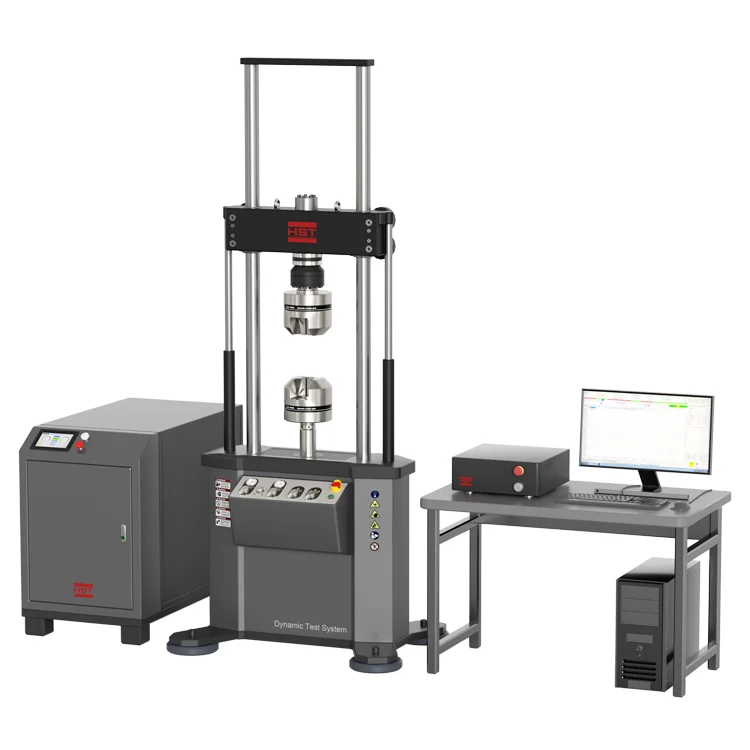
Fatigue Testing Machine
High-precision electronic universal testing machines designed for testing the mechanical properties of materials are widely used in laboratories, factories, and quality inspection agencies.
Fatigue testing machine ---hydrualic type, electronic type, and high frequency type for making tensile, compressionor bendin dynamic test
This series computer Control Electro-hydraulic Servo Fatigue Testing Machine is mainly used to detect a variety of metals, non-metallic materials and small movable member, the static mechanical properties test. It can do tensile, compression, bending, low cycle and high cycle fatigue, crack growth, fracture mechanics test under sine, triangle, square wave, trapezoidal wave, random wave, combination waveform.
This Test machine is flexible, moving beam down, locking the sample holder by button operations, the use of advanced hydraulic servo drive technology loaded, high precision and high resolution dynamic load sensor magnetostrictive displacement sensor specimens force values and displacement.
GB / T2611-2007 《Tester General technical requirements》
GB / T16826-2008 《Hydraulic servo universal testing machine》
GB 3075 《Axial fatigue testing metal》
JB / T9379-2002 《Tension and compression fatigue test machine technical conditions》
GB / T228-2010 《Metallic materials at room temperature tensile test method 》
HB5287 Axial Loading Fatigue Test Method for Metal Materials
EN10002 Tensile Test of Metallic Materials
JJG 556-2011 Axial Force Fatigue Testing Machine
HG/T 2067-1991 Technical specifications for rubber fatigue testing machine
ASTM E399-09 Metallic materials Kic standard test for linear elastic plane strain fracture toughness
ASTM E1820 2001 test standard for measuring fracture toughness
Experiential Materials Mechanics Testing
Complex testing tasks have never been easier. This video will guide you through our intuitive interface and powerful data analysis software.
Quick Setup: Pre-set test templates for one-click start.
Real-time Visualization: Dynamically track the testing process and automatically generate stress-strain curves.
Safe and Reliable: Equipped with overload protection and automatic limit functions to ensure operator and equipment safety.
Watch the video to see how this UTM significantly improves your testing efficiency while maintaining lab-grade accuracy.
Product Features
USA Interface High-precision Spoke Load Cell
Tensile and compressive biaxial fatigue sensor, maximum test force: ±12.5kN, 150% overload capacity, in conjunction with the control system, indication error ±1%; the sensor is calibrated before leaving the factory.


USA MOOG Servo valve
The servo valve from MOOG, USA, has a single-valve flow rate of 63 L/min and a pressure of 21 MPa; it is directly integrated with the actuator via a servo valve mounting base.
Germany NOVO Displacement sensor
The hysteresis telescopic non-contact displacement sensor has an effective range (maximum displacement) of ±75mm. When used with a control system, the indication error is ±0.5%FS. The sensor is calibrated before leaving the factory.


Constant pressure servo pump station
The oil pump is a German Rexroth constant pressure variable pump, which uses involute internal gear meshing transmission, resulting in low noise and excellent durability and long service life.
Side-Loading Hydraulic Wedge Grips
Meets material the high and low frequency fatigue test
*Working pressure:1- 21Mpa
*Open structure, easy to change the jaws


Professional Test Dynamic Test software
-
1
Integrates various dynamic testing functions into one unit -
2
For dynamic testing, arbitrary combinations of test waveforms can be defined to form test spectra and test processes, controlling the testing machine to complete various complex dynamic fatigue tests. -
3
For static testing, the software integrates major international and domestic GB standard software modules in the field of materials testing, offering powerful functionality suitable for both scientific research and conventional process research. -
4
Data acquisition, test procedures, data storage, test protection, and other functions can all be programmed in an event-driven manner, assisting users in completing various complex test operations.
Fatigue Testing Machine Model Selection
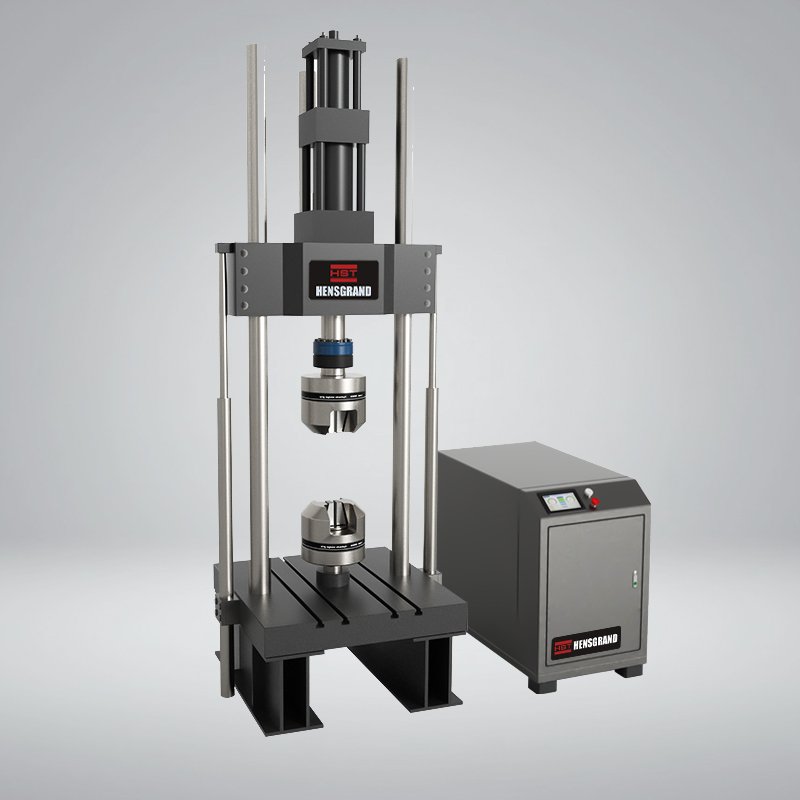
HST HFT-A Series
2-Coulun Electro-hydraulic Servo Dynamic Static Fatigue Testing Machine
The actuator is placed on top and the T-type stage is placed on the bottom to form a closed frame
structure. The frame has high rigidity, no backlash and good stability.
The actuator adopts a double-acting cylinder design. The T-type stage can be installed with hydraulic
fixtures, as well as various parts and structural parts.
The lifting, locking and sample clamping of the movable beam are all operated by buttons, which is
flexible and convenient.
Test load
- 100kN~250kN
Model
- HST HFT-100A/HST HFT-250A
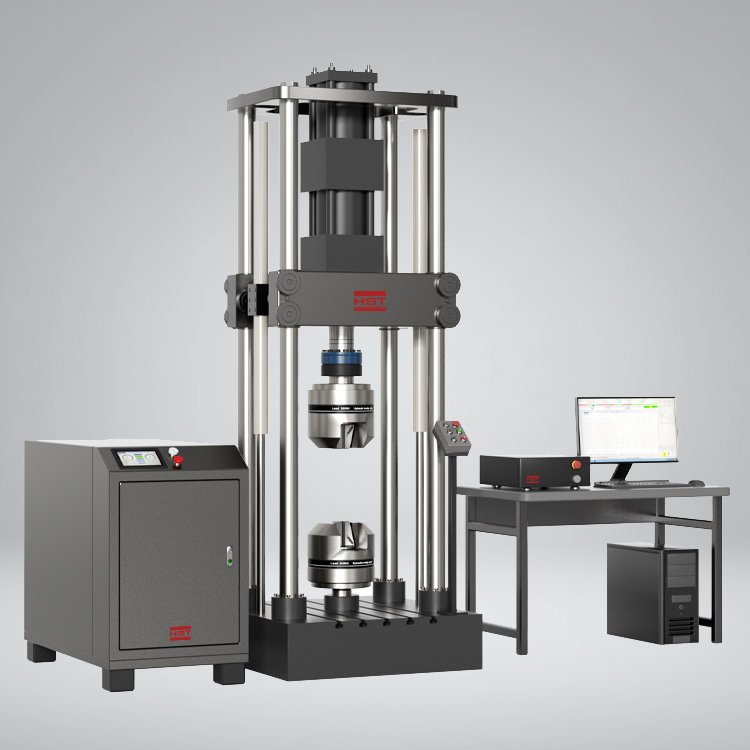
HST HFT-A Series
4-Coulun Electro-hydraulic Servo Dynamic Static Fatigue Testing Machine
The actuator is placed on top and the T-type stage is placed on the bottom to form a closed frame
structure. The frame has high rigidity, no backlash and good stability.
The actuator adopts a double-acting cylinder design. The T-type stage can be installed with hydraulic
fixtures, as well as various parts and structural parts.
The lifting, locking and sample clamping of the movable beam are all operated by buttons, which is
flexible and convenient.
Test load
- 250kN~2500kN
Model
- HST HFT-250A/HST HFT-500A/HST HFT-1000A/HST HFT-2500A
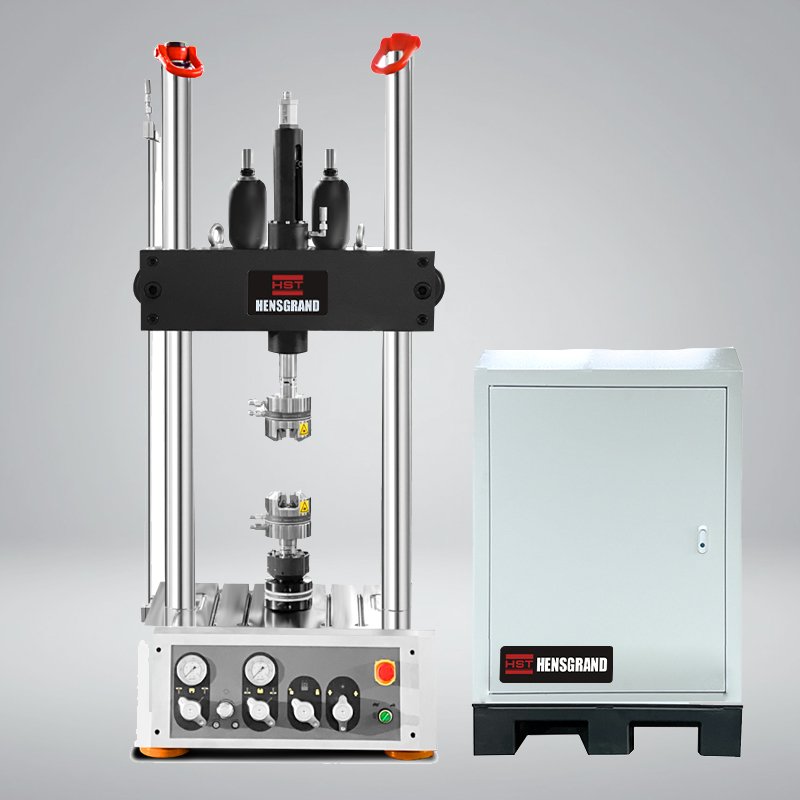
HST HFT-A Series
Tabletop Servo Hydraulic Dynamic Fatigue Testing Machine
It can be equipped with wedge clamps, compression clamps, bending clamps, fracture mechanics
clamps, biological bone clamps, etc.
The base air spring is used for vibration reduction to prevent fatigue vibration from being transmitted to
the surrounding area;
It is equipped with a servo oil source, which has low noise, low energy consumption, and adjustable
output flow
Test load
- 5kN~25kN
Model
- HST HFT-5A/HST HFT-10A/HST HFT-25A
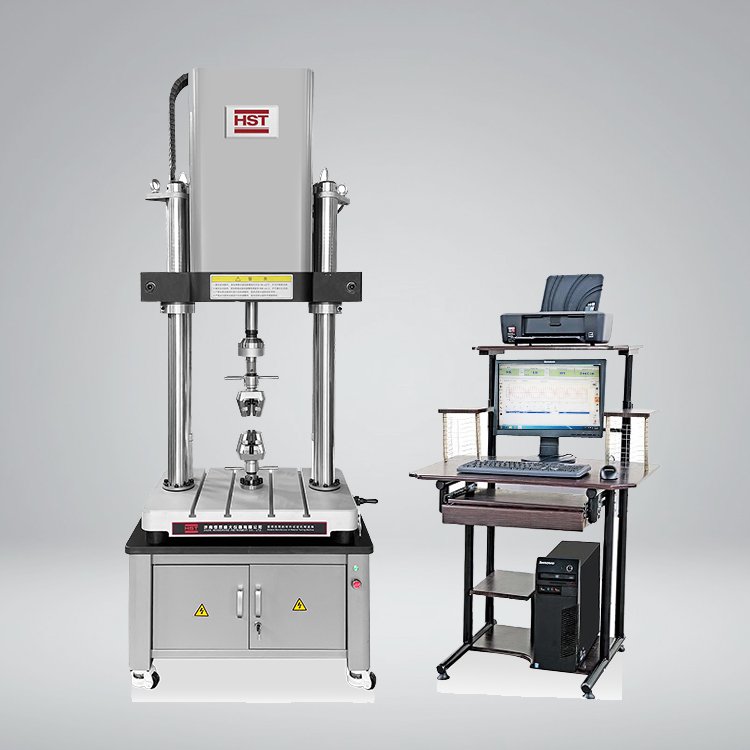
HST ETF-A Series
Tabletop Electronic Fatigue Testing Machine
The main machine is a closed T-type frame structure with high frame rigidity, no backlash, and good stability.
The electronic actuator is placed on the top, with compact structure, small size, no need for lubricating
oil and hydraulic oil, clean environment, no noise, and maintenance-free.
Test load
- 1kN~50kN
Model
- HST ETF-2A/ HST ETF-5A/ HST ETF-10A/ HST ETF-20A
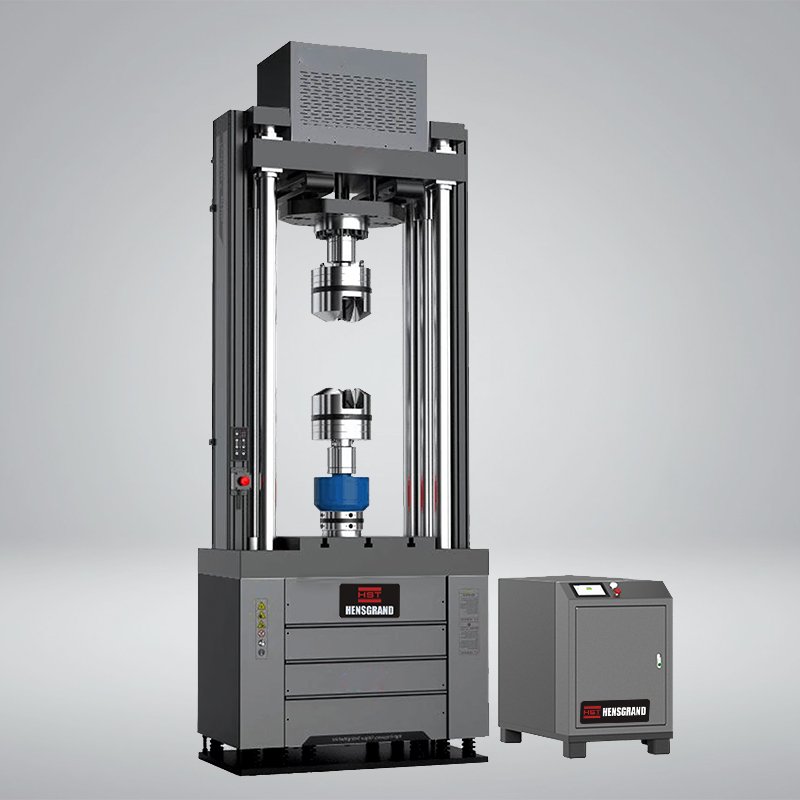
HST-PLG Series
HST-PLG Series Electromagnetic Resonance High Frequency Fatigue Testing Machine
PLG Series Electromagnetic Resonance Fatigue Testing Machine is used for fatigue tests on metallic materials and components under tension, compression or reversal load. Equipped with relevant grips, three-point bending test, four-point bending test, tension and compression of sheet sample test, tension and compression of circle test, gear wheel, bolt, connecting rod, roller chain, crackle expanding tests can be done on this machine. The
series of testing machines undergo optimization design, the structure is rational. The automatic controlled system adopts the advanced pulse wide control system and new-type power amplifier to improve the reliability of the electric system .
It has high efficiency, easy to shake, no-stop shake, low energy consummation, high controlling accuracy, small fluctuation. The machine is complied with DIN50100.
Test load
- 20kN~500kN
Model
- HST-PLG-20C/ HST-PLG-50C/ HST-PLG-100C/ HST-PLG-200C/ HST-PLG-300C/ HST-PLG-500C
A Fatigue tester
Tensile Test Grip
Compression Test Grip
CTOD Test Grip
Bending Test Grip
LCF Test Grip
CT test grip
Application Cases of Fatigue Testing Machine

Vietnam Market 500kn Electro-hydraulic Servo Fatigue Testing Machine do CTOD Test

100kn Electro-hydraulic Servo Fatigue Testing machine with CE ISO certificates

General FAQs
What is a fatigue testing machine?
A fatigue testing machine is a specialized device designed to evaluate the durability and performance of materials, components, or structures under repeated cyclic loading. It simulates real-world stress conditions (e.g., tension, compression, bending, or torsion) to determine how a material behaves over time, helping identify its fatigue limit, lifespan, and failure modes.
How does a fatigue testing machine work?
The machine applies controlled, cyclic loads to a test specimen at specified frequencies and amplitudes. It uses precision actuators, load cells, and displacement sensors to monitor parameters like stress, strain, and cycles to failure. Advanced models integrate software for real-time data analysis, enabling users to track fatigue life curves and material degradation patterns.
What industries rely on fatigue testing machines?
Fatigue testing machines are critical across industries such as:
Aerospace: Testing aircraft components (e.g., turbine blades, landing gear) for long-term reliability.
Automotive: Evaluating engine parts, suspension systems, and chassis under repeated road stress.
Manufacturing: Ensuring structural materials (metals, composites, polymers) meet durability standards.
Energy: Assessing wind turbine blades, oil drilling equipment, and power transmission components.
What factors should I consider when selecting a fatigue testing machine?
Key considerations include:
Load capacity: Match the machine’s maximum load to your test requirements (e.g., low-load for small components, high-load for structural parts).
Frequency range: Choose a machine with adjustable frequency (typically 0.1–100 Hz) to simulate real-world operating conditions.
Test modes: Ensure compatibility with required loading types (tension-tension, compression-compression, or combined loading).
Control software: Opt for intuitive software with data logging, curve analysis, and compliance with industry standards.
How often should a fatigue testing machine be maintained?
Regular maintenance is critical to ensure accuracy and longevity:
Daily: Inspect cables, sensors, and specimen grips for wear or damage.
Monthly: Calibrate load cells and displacement transducers (per ISO/ASTM standards).
Annually: Service actuators, hydraulic systems (if applicable), and update software.
After heavy use: Check for loose components or abnormal noise, and lubricate moving parts as needed.
Does your fatigue testing machine comply with international standards?
Yes. The machine meets global standards including ISO 12111 (fatigue testing of metallic materials), ASTM E2368 (standard practice for fatigue testing), DIN 25201 (fatigue testing of springs), and GB/T 13682 (fatigue testing of fasteners). It is CE-certified (for EU markets) and FCC-certified (for US markets), ensuring compliance with safety, electromagnetic compatibility (EMC), and environmental regulations. Customized configurations can be adapted to industry-specific standards (e.g., aerospace: RTCA DO-160, automotive: ISO 16750)
What technical support and after-sales services do you offer?
We provide comprehensive support, including:
Installation & training: On-site setup and operator training for optimal machine use.
Calibration services: Accredited calibration certificates to ensure compliance with quality standards.
Spare parts: Fast delivery of genuine components for minimal downtime.
Remote troubleshooting: 24/7 technical support via phone, email, or video call.
Can fatigue testing machines be customized for specific applications?
Absolutely. We offer tailored solutions, such as:
Custom grips or fixtures for unique specimen geometries (e.g., small electronics, large structural beams).
Environmental chambers (temperature, humidity, corrosion) to simulate harsh operating conditions.
Multi-axis loading systems for complex stress scenarios (e.g., combined tension and torsion).
What are common issues with fatigue testing machines, and how to troubleshoot them?
Inconsistent load readings: Check for loose connections or sensor calibration; recalibrate load cells if needed.
Excessive noise/vibration: Inspect actuator alignment or worn bearings; lubricate moving parts.
Software errors: Update firmware or contact technical support for diagnostic assistance.